
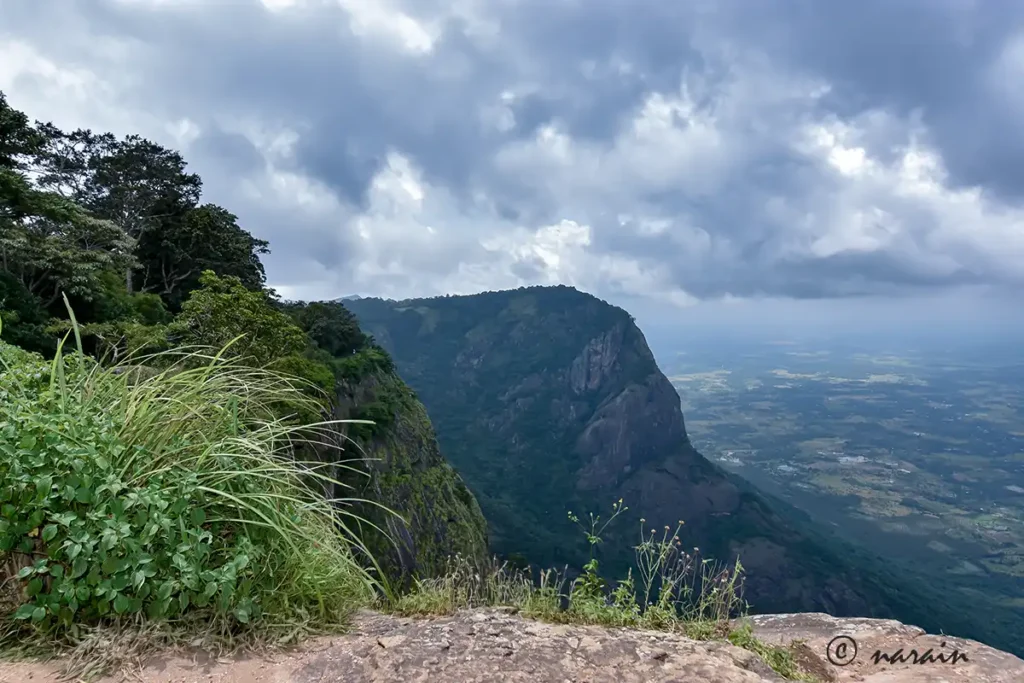
The Malabar Great Hornbill (Buceros bicornis)
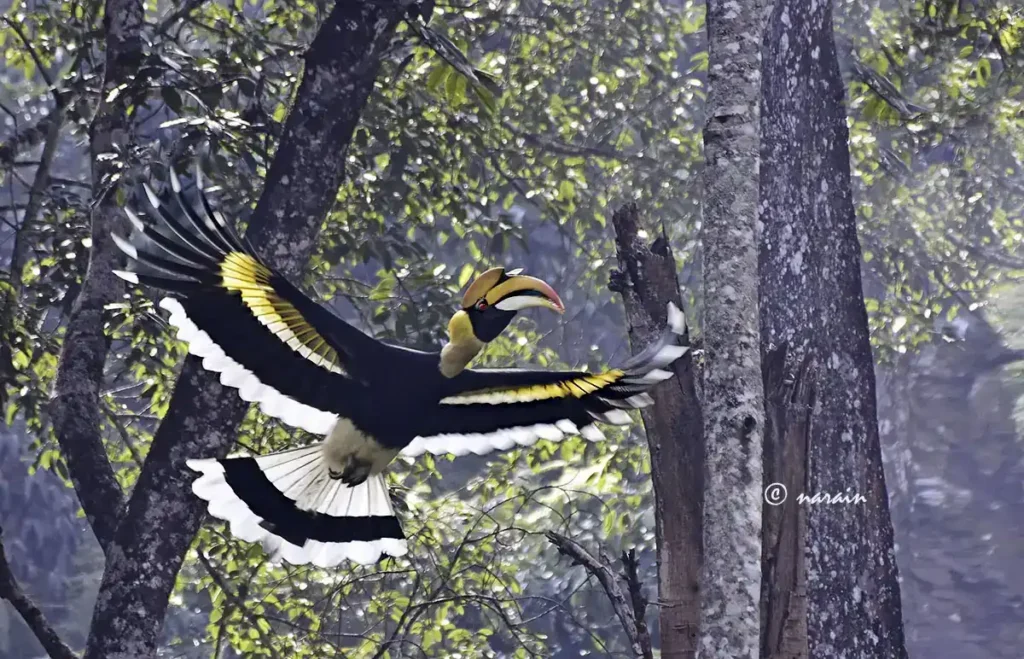
The Nelliampathy Hills woke before dawn, but it was the Malabar Great Hornbill that truly stirred the forest — first with the deep, rhythmic wingbeats that thumped through the canopy like distant drums, then with its unmistakable echoing calls rolling across the valleys in a wild, resonant chorus. For a moment, the mist itself seemed to pause, parting just enough to reveal the giant silhouette gliding overhead, its casque catching the first light. A sighting here isn’t just visual; it’s an experience that arrives as sound, vibration, and awe all at once.
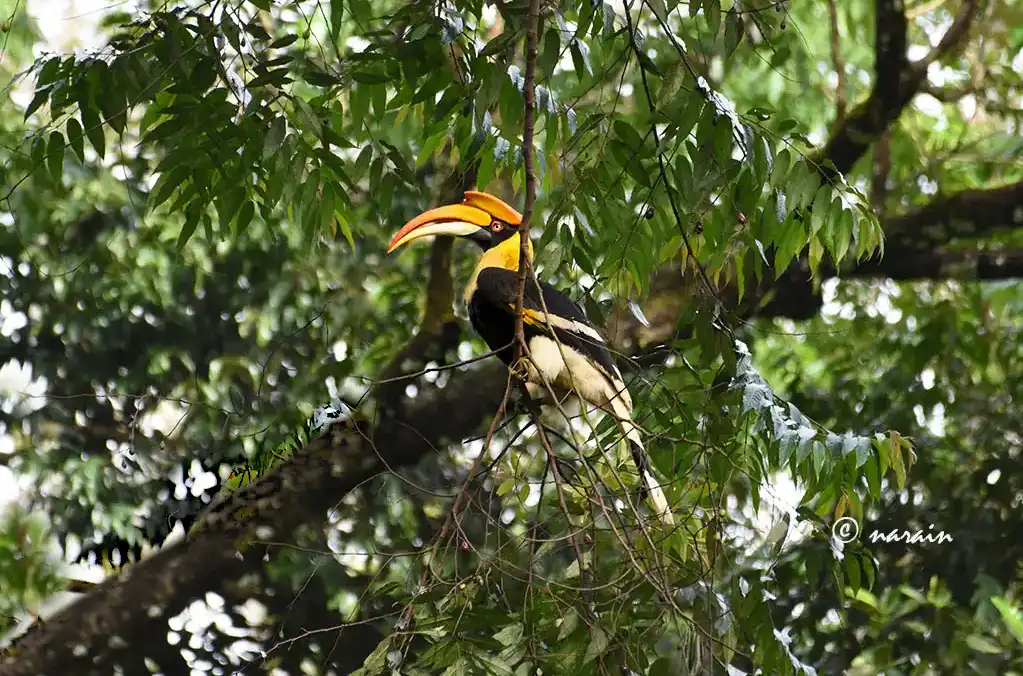
I was lucky enough to witness this spectacle: the heavy wingbeats slicing through the cool air, the echoing calls bouncing off the valley walls, and the sudden reveal of a giant silhouette perched regally on a high branch. And yes — I managed to capture a few photographs of feeding, perching, and mid flight moments. I won’t boast, but trust me, they’re worth a second look.
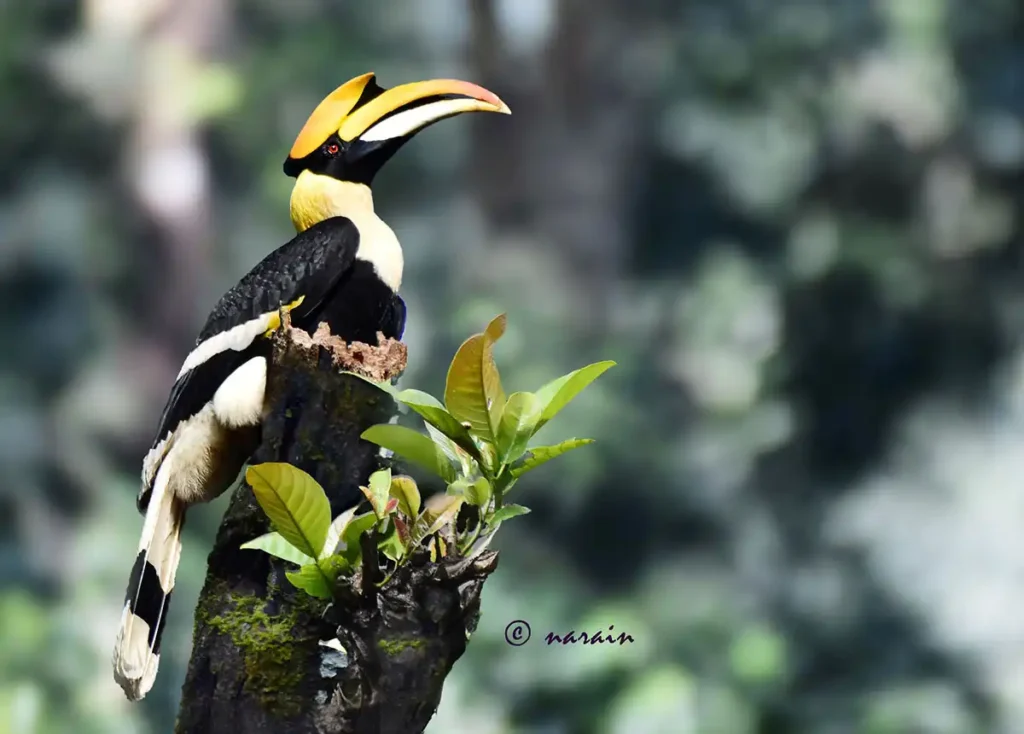
The Bird That Carries the Forest on Its Wings
The Malabar Great Hornbill (Buceros bicornis) is one of India’s largest and most iconic forest birds. With a wingspan that can stretch over 5 feet, its flight is not silent — it’s a drumbeat, a forest announcement. Locals often say you hear the hornbill before you see it, and they’re right.
Its casque — the golden helmet like structure atop its beak — glows in the morning light, making it look almost mythical.
How to Tell Males from Females:
Males: Feature dark, blood-red eyes and a prominent black shade underneath the front of the casque.
Females: Possess clear white rings around their eyes (orbital skin) and lack the heavy black markings on the casque.
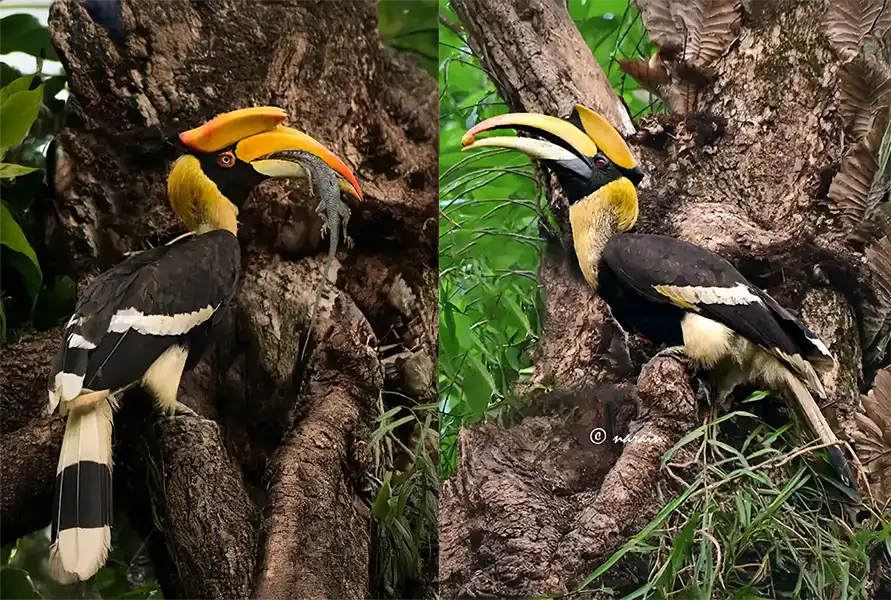
Feeding Habits:
Hornbills are fruit lovers, and in Nelliampathy, the ficus trees are their favorite buffet.
Their diet includes: Frugivorous Diet: They are predominantly fruit-eaters. Figs (Ficus species) make up the vast majority of their diet year-round.
The Berry Flip: They have an incredible way of eating. They pluck a fruit with the tip of their heavy beak, toss it into the air, and catch it effortlessly in their throat. Watching one feed is a delight
Carnivorous Side: They are opportunistic hunters. During the breeding season, they actively hunt lizards, snakes, frogs, insects, and even small mammals or other birds’ chicks to provide vital protein to their growing families.
Ecological Impact: Because they swallow large fruits whole and fly long distances before defecating the seeds, they are widely celebrated as the “Farmers of the Forest” or forest engineers.
Breeding Season: A Story of dedication.
The breeding ritual of the Malabar Great Hornbill is one of nature’s most astonishing acts of trust.
• Breeding months: February to April
• The female seals herself inside a tree cavity using mud, droppings, and fruit pulp.
• Only a narrow slit remains — just enough for the male to pass food through.
• She stays inside for up to 3 months, laying eggs, incubating them, and molting.
• The male tirelessly feeds her and the chicks until they break out.
• If the male falls victim to a predator during this time, the hidden family inside will starve.
Lifespan & Longevity
Hornbills are long lived birds. In the wild, the Malabar Great Hornbill can live:
• 35–40 years
• Some individuals in protected environments have lived even longer
Their slow breeding cycle and long lifespan make conservation crucial.
Where Else Can You Spot Them in India?
Great Hornbills require tall, pristine forest canopies. In India, their distribution is split across two major geographical regions:
The Western Ghats (Southern India)
Nelliyampathy Hills (Kerala): Exceptional hotspots, particularly along the routes to coffee estates and forest fringes.
Vazhachal & Sholayar Forests (Kerala): Renowned riparian habitats for multiple hornbill species.
Periyar Tiger Reserve (Kerala): Thick, protected evergreen forest canopy.
Anamalai Hills (Tamil Nadu): Borders Kerala, offering prime high-altitude rainforest habitats.
The Northeast Indian Rainforests:
Arunachal Pradesh: Found abundantly in the foothills; it shares the title of state bird here.
Assam: Broadleaf evergreen tracts and protected areas like Kaziranga host robust populations.
Nagaland: Widely distributed across its dense interior mountain forests.
The Nelliampathy Experience: More Than Just a Sighting
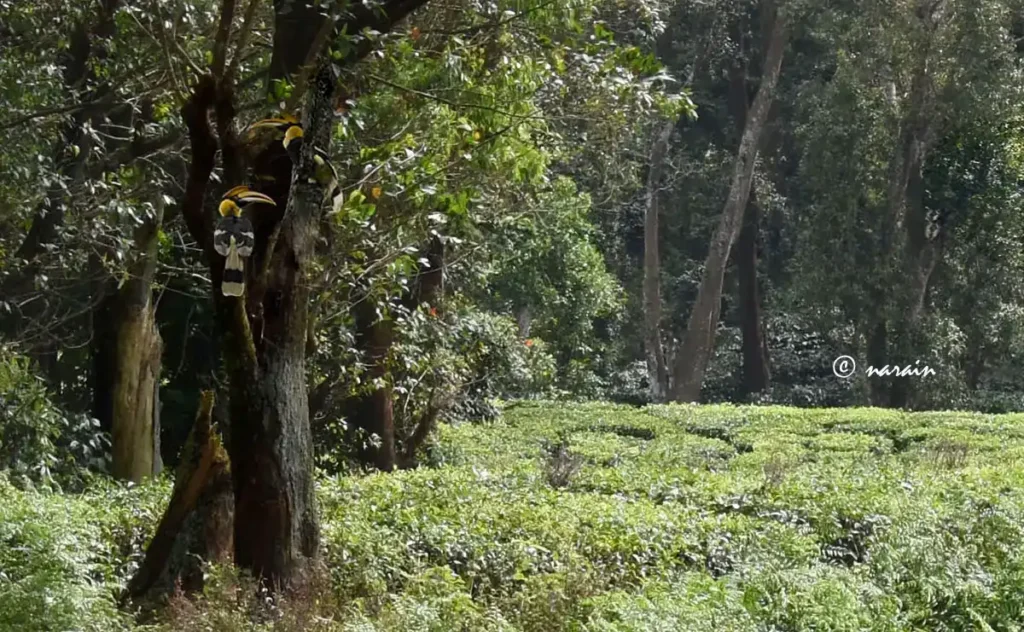
The hills themselves are a character in this story. The mist, the layered ridges, the towering shola forests — they create a natural amphitheatre where hornbill calls bounce and blend.
During the period of breeding, feeding the chick they used to scale upward in the deep forests, making their sighting difficult. But once the chick slowly comes out of the nest, we can see the parents throw a net of caution around the chick. Normally the winter starts by then and the sightings of the bird makes more easy and large in numbers. During the winter in Nelliampathy they slowly and as a batch come out of the deep forest .
A Closing Note
A birding trip to Nelliyampathy in Kerala is an incredible experience. Capturing the majestic Great Hornbill on camera requires immense patience and skill. Watching this magnificent bird rise into the mist, its wings beating like the pulse of the ancient Ghats, I realized how rare it is to witness something that reminds you of your own smallness and your own belonging at the same time. Wishing you an ethical birding and bird photography.